-p-500.jpeg)
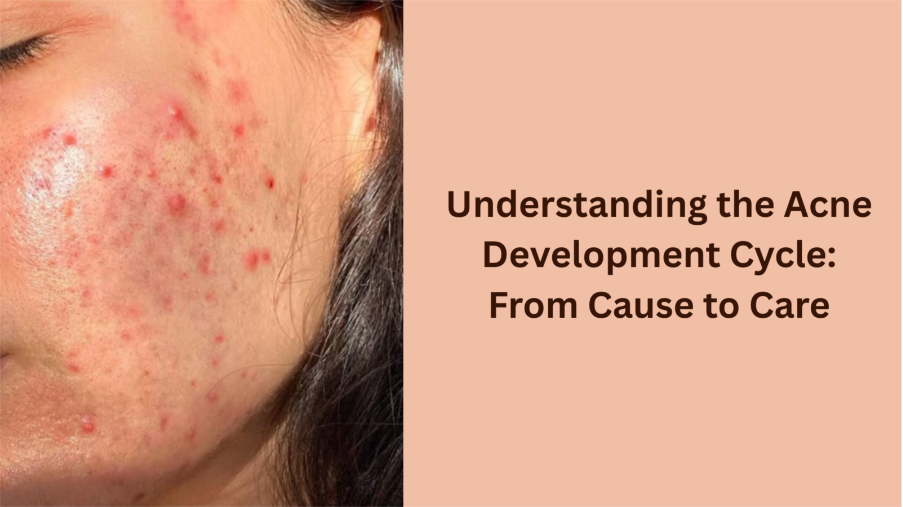
Acne is one of the most common skin concerns worldwide, affecting people of all ages. While it often appears as pimples or blackheads on the surface, the process behind acne formation is complex and occurs in distinct phases. Understanding the acne development cycle helps in choosing the right treatments and preventing future breakouts.
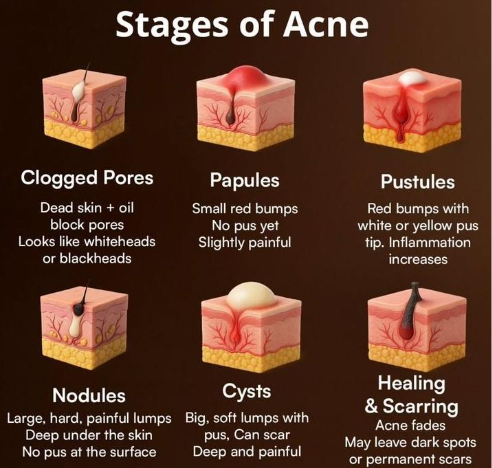

Phase 1: Clogging Phase (Comedogenesis)
What Happens:
The cycle begins when dead skin cells and excess sebum (oil) accumulate inside the hair follicle. Normally, these cells shed naturally, but in acne-prone skin, they stick together and block the pore.
Result:
Formation of a microcomedone, the earliest stage of acne.
How to Manage:
- Gentle exfoliation with AHAs (glycolic, lactic acid) or BHAs (salicylic acid).
- Use cleansers with mild surfactants to avoid irritation.

Phase 2: Bacterial Growth & Inflammation
What Happens:
The blocked pore creates an oxygen-poor environment where Cuti bacterium acnes (C. acnes) bacteria thrive. This triggers inflammation, leading to redness and swelling.
Result:
Papules or pustules (inflamed pimples).
How to Manage:
- Anti-inflammatory ingredients like niacinamide.
- Antibacterial agents such as benzoyl peroxide or tea tree oil.

Phase 3: Healing & Post-Acne Marks
What Happens:
The body fights the infection, and the lesion begins to heal. However, inflammation can damage surrounding tissue, leaving hyperpigmentation or scars.
Result:
Dark spots or pitted scars.
How to Manage:
- Brightening actives like Vitamin C, Alpha Arbutin, Tranexamic Acid.
- Barrier repair with ceramides and peptides.

Factors That Influence the Cycle
- Hormones: Increased androgen levels boost sebum production.
- Diet: High glycemic foods can worsen acne.
- Stress: Triggers hormonal imbalance and inflammation.
- Improper Skincare: Harsh cleansers or over-exfoliation can aggravate acne.

Breaking the Cycle
A successful acne routine targets all phases:
- Phase 1: Exfoliation + oil control.
- Phase 2: Anti-inflammatory + antibacterial care.
- Phase 3: Brightening + scar prevention.

Conclusion
Acne is not just a surface problem it’s a multi-phase process involving clogged pores, bacterial growth, and inflammation. By understanding the acne development cycle, you can choose products that prevent, treat, and heal effectively.

Written by Zymist: Janvi Patel & Edited by Zymist: Priyal Shah