-p-500.jpeg)
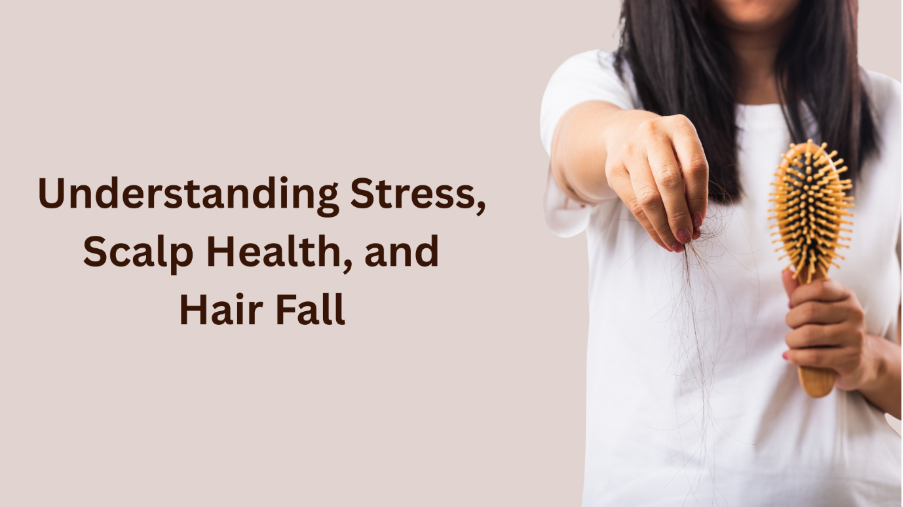
Stress doesn’t just affect your mind it can quietly show up on your hair. When your body is under emotional or physical pressure, many hair follicles enter the “resting” (telogen) phase, leading to sudden hair shedding weeks or months later. This is called Telogen Effluvium, one of the most common types of stress-related hair loss.

Types of Stress-Related Hair Loss
1. Telogen Effluvium
- What happens: Stress triggers the fight-or-flight response, releasing norepinephrine.
- Effect on hair: Fast-growing follicle cells are damaged, but stem cells stay intact, so hair usually grows back.
2. Alopecia Areata
- What happens: Chronic stress damages follicles, and the body mistakes injured tissue for a threat.
- Effect on hair: The immune system attacks follicles, causing small bald patches. Repeated stress can trigger recurring hair loss.

Signs Your Hair Is Under Stress
- Excess hair in your brush or shower drain
- Widening of the part line
- Itchy, sensitive, or inflamed scalp
- Brittle or dry hair

Breaking the Hair Fall Cycle
- Reduce Stress: Yoga, meditation, deep breathing.
- Sleep Well: 7–9 hours to restore follicles.
- Eat Right: Iron, zinc, biotin, omega-3s for healthy hair.
- Gentle Hair Care: Avoid heat, harsh chemicals, and tight hairstyles.
- Scalp Stimulation: Massage or treatments to promote regrowth.

Conclusion
Stress can affect your hair, but most stress-related hair loss is temporary and reversible. By recognizing the signs, managing stress, and caring gently for your hair and scalp, you can support healthy regrowth. Remember: a calm mind and a nourished scalp are the first steps to stronger, fuller hair.

Written by Zymist: Priyanka Gami & Edited by Zymist: Priyal Shah