-p-500.jpeg)
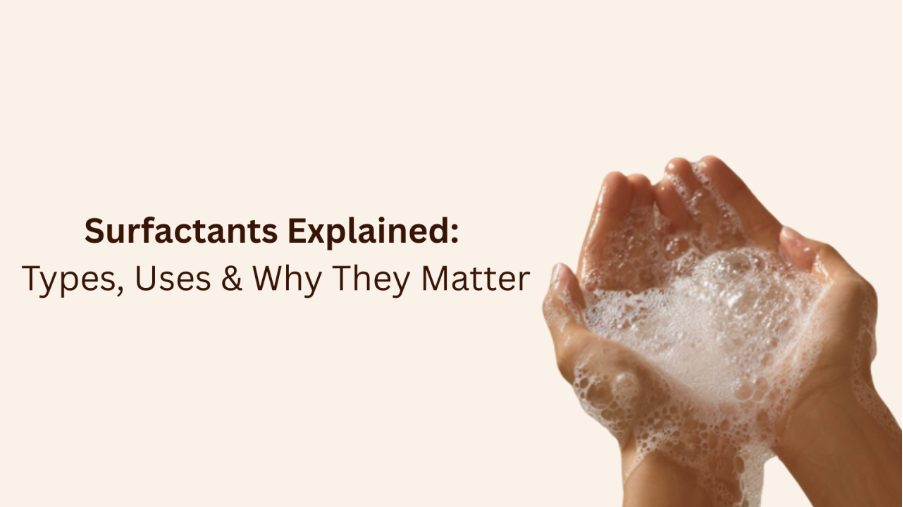
What is a Surfactant?
A surfactant (surface-active agent) is a substance that reduces surface tension between two immiscible phases (oil & water), allowing them to mix, clean, emulsify, or disperse.
How it works (basic principle)
Surfactants have two parts:
- Hydrophilic head → attracts water
- Lipophilic tail → attracts oil/dirt
When added to water, they surround oil and dirt, forming micelles
These micelles are rinsed away with water

what is a surfactant

Types of Surfactants & Mechanism of Action
Anionic Surfactants
- Charge: Negative
- Primary role: Cleansing & foaming
o Mechanism of Action:
- Negative head binds strongly to oil, dirt, and sebum
- Forms micelles that trap greasy impurities
- High detergency → effective soil removal
Examples:
- Sodium Lauryl Sulfate (SLS)
- Sodium Laureth Sulfate (SLES)
- Sodium Cocoyl Isethionate (SCI)
- Sodium Lauroyl Sarcosinate
✔ Excellent cleansing
✔ Rich foam
Used in: Face wash, shampoo, body wash

Amphoteric (Zwitterionic) Surfactants
- Charge: Positive & negative (pH-dependent)
- Primary role: Mild cleansing, foam stabilization
o Mechanism of Action:
- Adjusts charge depending on formulation pH
- Reduces irritation of anionic surfactants
- Improves foam creaminess & stability
Examples:
- Cocamidopropyl Betaine (CAPB)
- Sodium Cocoamphoacetate
- Sodium Lauroamphoacetate
✔ Very mild
✔ Reduces harshness
Used in: Face wash, baby wash, shampoos

Non-Ionic Surfactants
- Charge: None
- Primary role: Mild cleansing, solubilization
o Mechanism of Action:
- Cleans via hydrogen bonding
- Less interaction with skin proteins → low irritation
- Helps solubilize oils & fragrances
Examples:
- Decyl Glucoside
- Coco Glucoside
- Lauryl Glucoside
- Polysorbate 20 / 80
✔ Very gentle
✔ Good for sensitive skin
Used in: Baby products, micellar water, sensitive cleansers

Cationic Surfactants
- Charge: Positive.
- Primary role: Conditioning, antistatic
o Mechanism of Action:
- Positively charged head binds to negatively charged hair/skin
- Forms a smooth conditioning layer
- Not designed for cleansing
Examples:
- Behentrimonium Methosulfate
- Cetrimonium Chloride
✔ Excellent hair conditioning
✔ Reduces frizz
Used in: Conditioners, masks, leave-in products

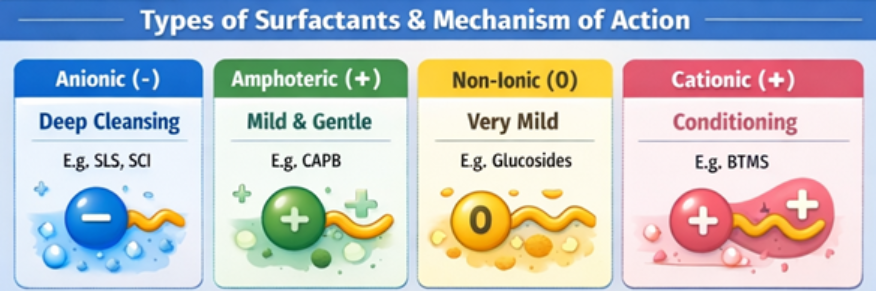
Types of surfactants
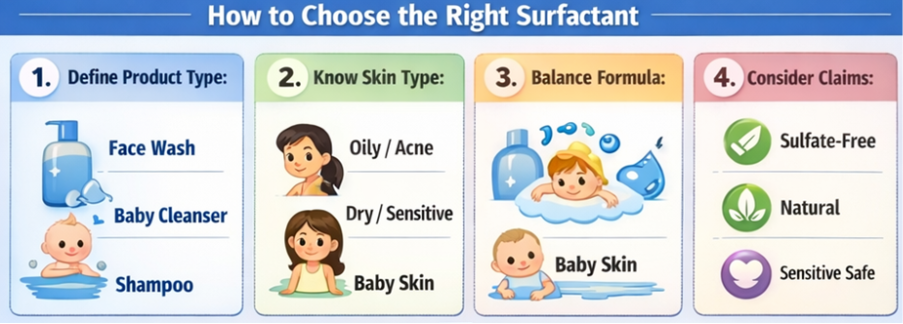
How to choose the right surfactant

Conclusion
Surfactants are essential ingredients that make effective cleansing possible by helping remove oil, dirt, and impurities from the skin. Understanding the different types of surfactants helps in choosing products that cleanse well while maintaining the skin’s natural balance.

Written by Zymist: Gauswami Mayurgiri & Edited by Zymist: Priyal Shah