-p-500.jpeg)
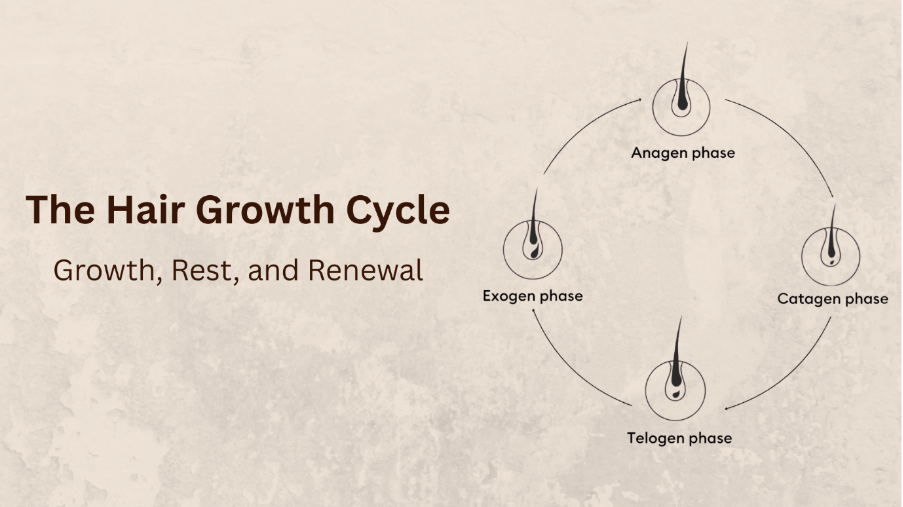
Our hair isn’t just growing; it’s living through a cycle of renewal. Every single strand on our head follows its own rhythm, constantly transitioning through phases of growth, rest, and regeneration. This incredible biological rhythm, known as the Trichogenic Cycle (or Hair Growth Cycle), is a finely tuned process controlled by the hair follicle itself. It determines how long, thick, and healthy our hair becomes. From the rapid cell division of the Anagen (Growth) Phase to the gentle release of old strands in the Exogen (Shedding) Phase, this cycle is nature’s way of maintaining balance, ensuring that while some hairs rest, others rise to shine.
The hair growth cycle is a biological process regulated by the hair follicle, consisting of successive phases of growth (anagen), regression (catagen), rest (telogen), and shedding (exogen), which together determine the length, density, and overall condition of the hair.
Each hair follicle operates independently, meaning not all hairs are in the same phase at the same time this is why we don’t lose all our hair at once.
The cycle consists of four primary phases, each with distinct biological activities:
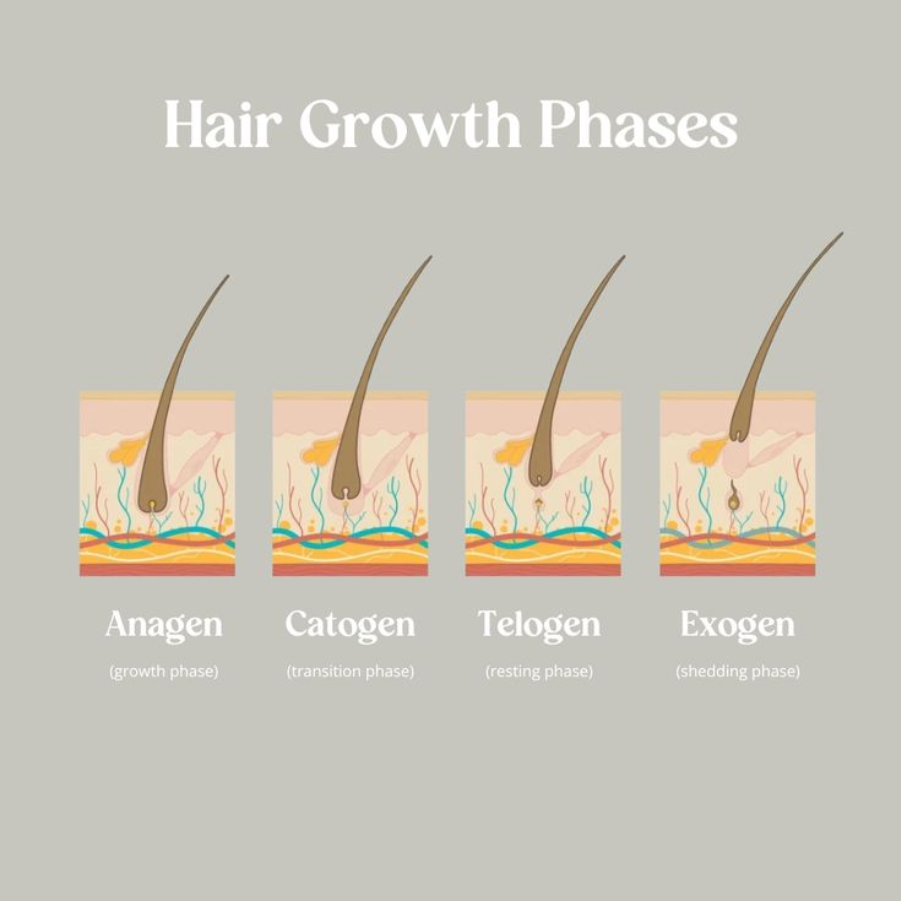

Anagen Phase (Growth Phase)
- This is the active growth period when hair cells divide rapidly.
- Hair lengthens by about 1 cm per month.
- It lasts 2–7 years on average, depending on genetics and health.
- About 85–90% of scalp hairs are in this stage.
- The anagen phase differs with different types of hair. For example, the anagen phase for eyebrow hairs and pubic hairs is much shorter than the phase for your scalp hairs.
- Anagen phase is generally longer in Asians.
- Hair grows around half and inch a month and faster in Summer than Winter.
- Thickness, texture and shape of hair is determined in this stage.

Catagen Phase (Transition Phase)
- A short transitional stage lasting 2–3 weeks.
- The hair follicle shrinks and detaches from Dermal papilla.
- Hair stops growing and forms a club hair.
- Only about 1% to 3% of the hairs on your head are in the catagen phase at any given time.

Telogen Phase (Resting Phase)
- The follicle becomes inactive and rests for 2–4 months.
- The old hair remains anchored while a new one starts forming beneath it.
- Around 10–15% of hairs are in this phase.
- Each hair follicle is independent and grows through the growth cycle at different times, otherwise all hair will fallout at once.
- Hairs don’t grow during the telogen phase, but they don’t usually fall out, either. The telogen phase is also when new hairs start to form in follicles that have just released hairs during the catagen phase.

Exogen Phase (Shedding Phase)
- The old hair sheds naturally, making way for a new strand.
- This phase lasts 2–5 months and overlaps with early Anagen.
- Losing 50–100 hairs per day is completely normal.

Conclusion:
The Trichogenic Cycle is your hair’s natural rhythm of life an ongoing process of growth, rest, and renewal that keeps your scalp healthy and balanced. By understanding this cycle, you can better care for your hair, choose the right treatments, and set realistic expectations for growth. Remember, healthy hair isn’t just about what you apply externally it’s also about nourishing your follicles from within, maintaining balance, and letting nature take its course strand by strand.

Written by Zymist: Gauswami Mayurgiri Edited by Zymist: Priyal Shah